
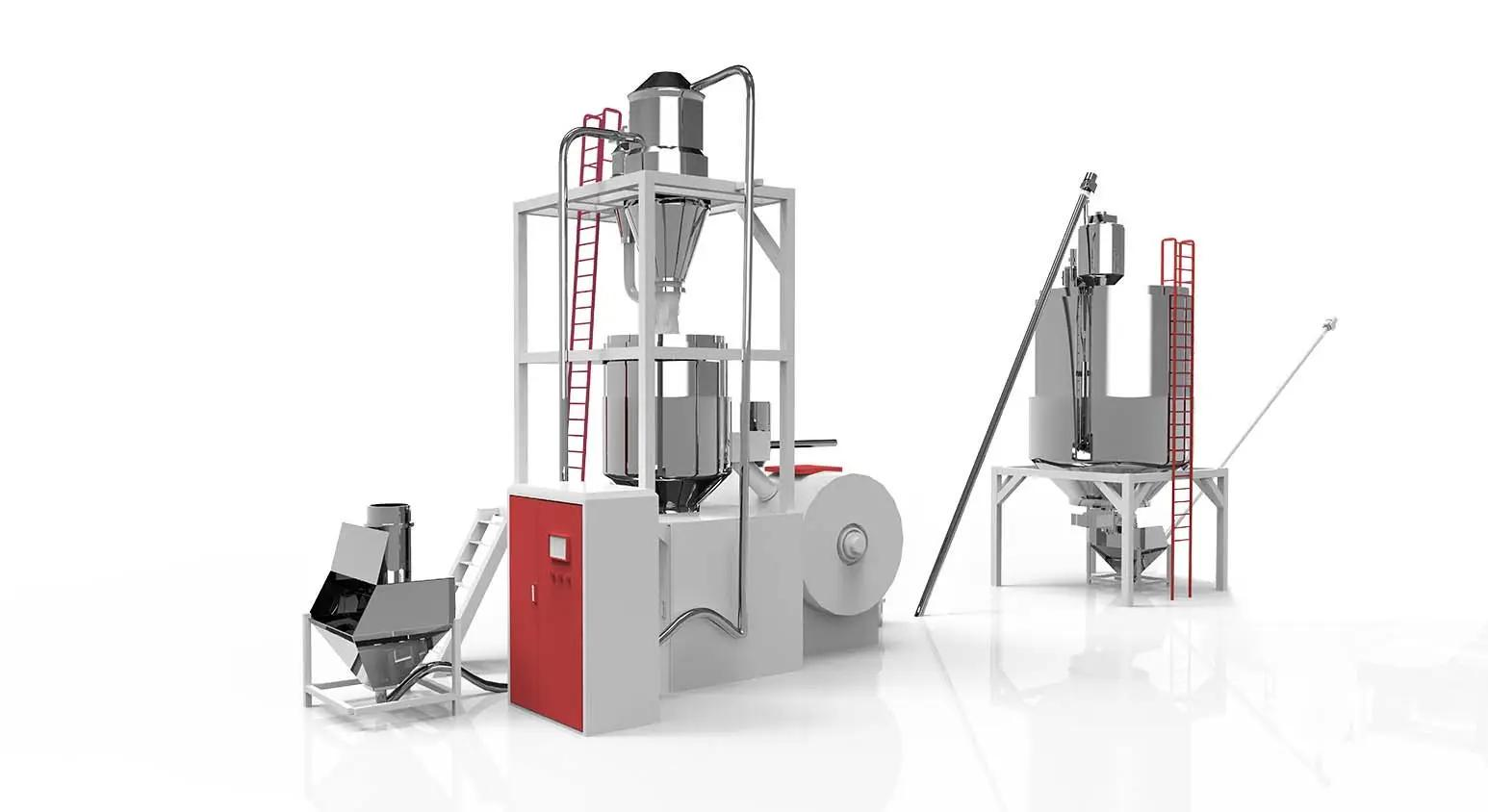
During continuous SPC flooring manufacturing, maintaining a consistent material supply is one of the key challenges faced by production teams. When raw materials fail to flow smoothly into the extrusion system, even short interruptions can affect processing stability, product consistency, and overall production efficiency. One common issue in this stage is material bridging inside the feeder or hopper.
Material bridging occurs when raw materials form a temporary blockage that prevents proper downward movement. This problem may appear simple, but it can influence the entire production process by causing uneven feeding, unstable extrusion conditions, and increased operator adjustments. For flooring manufacturers, understanding why bridging happens and how to prevent it is essential for maintaining reliable production performance.
Managing Material Flow Challenges in an SPC Flooring Production Line
In an spc flooring production line, the feeding system is responsible for delivering prepared materials to the extruder at a stable and controlled rate. Since SPC flooring production requires accurate material processing, fluctuations at the feeding stage may affect later processes, including extrusion, calendering, and final sheet formation.
Material bridging usually happens when materials inside the hopper or feeder lose their ability to flow naturally. Instead of moving downward continuously, the material may create a gap below while remaining attached to the surrounding walls. This prevents the feeder from supplying a consistent amount of material to the extruder.
Several conditions may increase the risk of bridging:
Poor material flow characteristics caused by particle size or composition
Excessive pressure from stored materials inside the hopper
Improper hopper structure or feeder design
Moisture or environmental factors affecting material behavior
Inconsistent material preparation before feeding
For factories operating high-volume flooring production, identifying these factors early can help reduce interruptions and maintain stable equipment performance.
Practical Approaches to Improve Feeding Stability
Solving material bridging requires more than simply increasing feeder speed. The solution usually involves evaluating material properties, equipment structure, and operating parameters together.
One important factor is feeder and hopper design. A properly designed feeding system should encourage smooth material movement and minimize areas where materials can accumulate. Internal surfaces, hopper angles, and discharge structures all influence how easily materials move toward the extrusion process.
Material preparation also plays an important role. Before entering the production system, raw materials should be properly mixed and handled according to manufacturing requirements. Consistent material conditions help reduce variations in flow behavior and improve feeding reliability.
Another effective approach is integrating suitable control systems. Automated monitoring allows operators to observe equipment conditions and make adjustments when feeding performance changes. By maintaining stable feeding parameters, manufacturers can improve the consistency of the extrusion process.
Regular inspection and maintenance should also be part of daily production management. Checking feeder components, removing material buildup, and monitoring unusual operating conditions can help prevent small issues from developing into larger production problems.
Optimizing Feeding Performance in an SPC Flooring Extrusion Line
In an spc flooring extrusion line, the relationship between the feeder and extruder directly affects production stability. The extruder requires a continuous and uniform supply of material to maintain proper temperature, pressure, and output conditions.
If feeding becomes unstable, manufacturers may experience several production challenges, including:
Uneven material processing
Increased extrusion parameter adjustments
Variations in product thickness
Lower production efficiency
A reliable feeding system helps create smoother communication between the material preparation stage and the extrusion stage. When the material supply remains consistent, downstream equipment can operate under more stable conditions.
Modern extrusion equipment often incorporates PLC control systems to improve production monitoring. These systems allow operators to manage important parameters and respond more quickly when abnormal conditions occur. For factories producing SPC flooring at scale, automation can support better production control and reduce reliance on manual adjustment.
Equipment Solutions for Stable Flooring Production
Selecting suitable equipment is an important decision for manufacturers planning new production facilities or upgrading existing lines. Beyond output capacity, factors such as equipment integration, operational stability, and customization capability should also be considered.
Boyu Machinery develops extrusion equipment for flooring applications and provides production solutions designed around different customer requirements. The company focuses on equipment design, automation control, and customized configurations to support various flooring manufacturing processes.
The equipment uses PLC control technology to assist operators in managing production parameters and improving operational accuracy. Through proper system integration, manufacturers can achieve better coordination between feeding, extrusion, and forming processes.
For companies investing in flooring production equipment, professional engineering support during equipment selection, installation, and commissioning can help ensure that the production system matches factory requirements.
Technical Experience Supporting Manufacturing Projects
Boyu Machinery has more than 22 years of experience in extrusion equipment development and provides solutions for flooring manufacturers in different markets. The company has professional R&D, technical, and project teams focused on equipment improvement and engineering support.
Boyu Machinery has accumulated more than 60 technical patents and software copyrights. In 2019, the company invested in a new 30,000-square-meter plant to strengthen manufacturing capabilities and support equipment development. The company has also passed ISO-9001 quality system certification, reflecting its focus on standardized production management.
For international flooring manufacturers, selecting an equipment supplier with technical experience can provide support throughout different project stages, from production planning to equipment adjustment and operation optimization.
Creating More Reliable Flooring Production Processes
Material bridging is not only a feeder issue but also a reflection of the overall coordination between materials, equipment design, and process control. By improving feeding stability, manufacturers can reduce production fluctuations and create more consistent SPC flooring manufacturing conditions.
A well-designed production system combines reliable mechanical structures, effective automation, and practical engineering solutions. These elements work together to improve efficiency and support long-term factory operation.
With experience in extrusion technology and flooring equipment development, Boyu provides equipment solutions, helping manufacturers address production challenges and optimize their SPC flooring manufacturing processes.