
Incomplete combustion occurs when part of the fuel does not react fully with available oxygen. In an industrial furnace, symptoms can include smoke, carbon deposits, unburned hydrocarbons, and elevated carbon monoxide (CO). The underlying problem is often not simply “too little air”; poor atomization, weak mixing, unstable flames, and incorrect operating conditions can all contribute.
Reducing incomplete combustion therefore depends on controlling the conditions under which oil is atomized, mixed, ignited, and burned. Burner design and operating adjustment have to work together rather than treating combustion air as an isolated setting.
Identify What Causes Incomplete Combustion
Fuel cannot burn completely unless sufficient oxygen reaches the fuel at the right time and temperature. Poorly mixed regions can remain fuel-rich even when the overall furnace appears to have adequate air.
Industrial combustion references identify improper fuel-air mixing, poor atomization, insufficient combustion air, flame instability, and unsuitable operating conditions among the causes associated with incomplete combustion. Fouled or damaged burner components can also interfere with the required mixing pattern.
Consequently, troubleshooting should begin by determining whether the problem originates in fuel preparation, air delivery, mixing, ignition, or flame stability. Simply increasing air may hide one symptom while creating another efficiency problem.
Improve Fuel Atomization Before Ignition
Liquid oil must be converted into a sufficiently dispersed spray so that fuel can interact effectively with combustion air. Industrial oil burners use different atomization methods, including pressure, air, steam, rotary-cup, and mechanical systems.
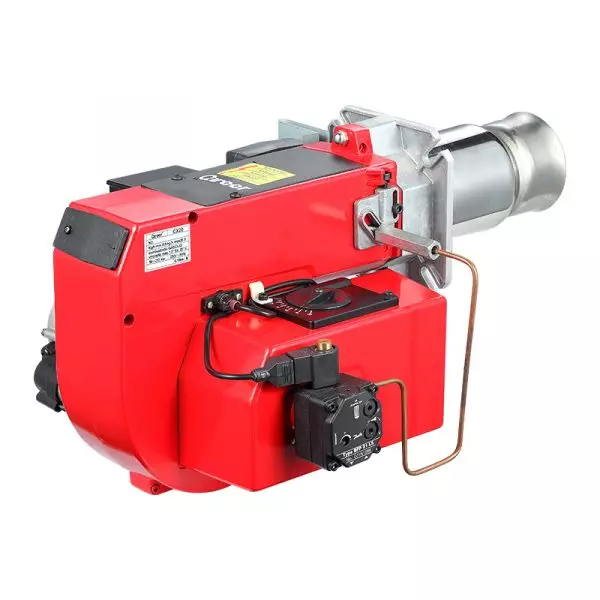
A high efficiency oil burner can support more complete combustion when its atomization system produces a suitable fuel spray for the intended operating conditions. Droplet formation affects evaporation, mixing, ignition, and the subsequent completion of the combustion reaction.
Fuel condition also matters. Changes in oil properties, viscosity, temperature, or pressure can affect atomization quality. For this reason, operators should verify the fuel-side conditions specified for the burner rather than assuming that an unchanged burner setting will remain optimal.
Create More Effective Fuel-Air Mixing
Good atomization alone is insufficient if the resulting fuel spray does not mix properly with combustion air.
Burner heads are designed to create turbulence and establish a controlled flow pattern around the fuel spray. ASHRAE describes industrial oil burners as forcing combustion air into the oil spray to create intimate and turbulent mixing before ignition.
Industrial combustion oil burners reduce incomplete combustion by creating a more effective mixing environment. Air registers, swirl devices, burner-head geometry, and fuel-injection arrangements influence how oxygen reaches the fuel.
Poor mixing can produce local fuel-rich zones even where measured overall oxygen appears adequate. Correct burner adjustment must consequently consider the combustion pattern, not just the total quantity of air entering the furnace.
Control Excess Air Without Overcooling the Flame
Combustion requires enough air to avoid oxygen deficiency, but adding air indefinitely is not the solution. Excessive air increases the volume of gases leaving the furnace and can carry additional heat toward the exhaust.
ASHRAE notes that practical combustion requires excess air because perfect fuel-air mixing cannot be achieved. It also emphasizes supplying only the minimum excess air needed for complete combustion because additional air reduces efficiency.
The operating target is therefore a controlled air-fuel relationship. Too little air can increase CO and unburned fuel, while excessive air can lower flame temperature and increase heat loss. There is similarly a point at which reducing excess air too far causes unburned fuel and CO to rise rapidly.
Maintain Flame Stability Through Proper Burner Operation
Even a correctly sized burner can produce incomplete combustion if the flame becomes unstable.
Stable combustion depends on maintaining an appropriate relationship among fuel spray, combustion air, ignition, and the hot recirculation zone around the flame. API guidance notes that good fuel-air mixing is essential for flame stability and that fouled oil guns or atomizers can disrupt this relationship.
Practical maintenance therefore becomes part of combustion control. Dirty atomizers, damaged burner tips, incorrect air-register settings, or unsuitable fuel conditions can alter the flame even after commissioning has been completed.
A persistent smoky flame should be treated as a combustion-system problem rather than corrected solely by opening the air damper.
Use Combustion Monitoring to Correct Drift
Visual flame appearance can provide useful clues, but combustion adjustment should not depend on appearance alone. Flue-gas measurements can reveal whether the burner is operating with excessive oxygen or producing elevated CO.
UNIDO identifies high CO with rich fuel-air mixtures and improper atomization or mixing, while high O₂ can indicate excessive air. Its troubleshooting guidance recommends checking burner components, dampers, fuel conditions, and air-fuel adjustment when these symptoms occur.
Regular monitoring is particularly useful because burner performance can change as components become fouled or fuel and airflow conditions vary. Measurements provide a basis for correcting combustion before incomplete burning becomes a persistent source of fuel loss or deposits.
Reduce Incomplete Combustion Through the Whole Burner System
Industrial oil burners reduce incomplete combustion most effectively when several combustion conditions remain aligned. Proper atomization prepares the fuel; controlled airflow supplies oxygen; turbulence promotes mixing; and a stable flame provides the environment needed to complete the reaction.
A high efficiency oil burner should therefore be evaluated by its ability to maintain suitable combustion across its intended operating conditions, not simply by a headline efficiency claim. Fuel preparation, burner-head condition, air adjustment, and monitoring all influence the result.
Career Burner‘s industrial combustion oil burners can deliver cleaner and more complete firing when their fuel and air systems are correctly matched and maintained. The practical objective is not maximum air or minimum air, but the right fuel-air mixture with reliable atomization and stable flame conditions. That balance reduces the likelihood of unburned fuel and CO while avoiding unnecessary excess-air losses.