
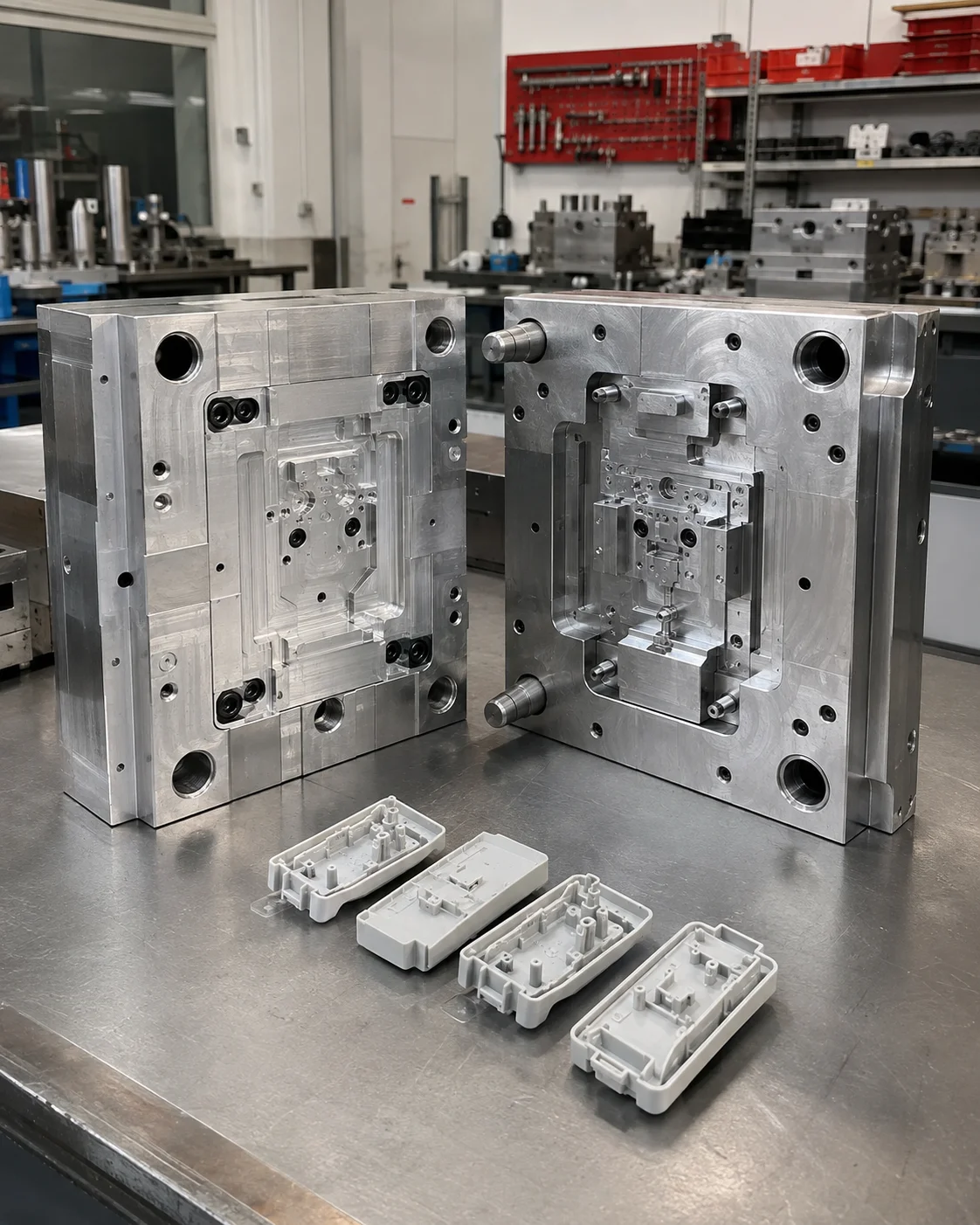
For companies sourcing rapid tooling in China, completing the mold is only one part of the manufacturing process. When a tool will eventually move from the original tooling supplier to a molding facility in another country, the project must also account for machine compatibility, tooling standards, technical documentation, inspection records, and maintenance.
A mold that performs well at the toolmaker’s facility may still create problems after transfer if its interfaces, components, or documentation do not match the receiving factory. This is why export tooling should be considered from the beginning rather than treated as a shipping step at the end.
HordRT now offers a dedicated export tooling route designed around this requirement, covering tooling definition, manufacturing, mold trials, documentation, validation, and shipment preparation.
Define the Destination Factory Before Mold Design
The first question is not simply how the mold will be manufactured, but where it will run after leaving China.
The receiving factory’s injection molding machine specifications can affect the mold structure. Platen dimensions, tie bar spacing, locating ring, nozzle configuration, mold height, clamping method, ejector arrangement, cooling connections, and electrical interfaces may all need to be considered.
HordRT specifically develops export tooling around the destination factory rather than assuming that its own production setup will remain relevant after shipment. Machine specifications and customer tooling standards can be reviewed before mold design is finalized.
This early coordination can prevent a costly situation in which a completed mold requires modification before it can be installed overseas.
Treat Tooling Standards as Part of the Specification
International projects can involve different preferences for mold bases, hot runner systems, connectors, standard components, and replacement parts. These details should be confirmed before manufacturing starts.
For an export mold, the tooling should operate as a standalone production system. HordRT’s export tooling service supports customer-specified mold base and component standards, including approved suppliers and regional requirements where applicable.
Tool steel and expected tool life should also be linked to the production plan. Resin selection, annual volume, part geometry, surface requirements, and expected service life can influence the appropriate tooling construction.
The objective is not simply to make a mold quickly. It is to make a mold that remains compatible with the intended production environment after transfer.
Validate the Mold Before International Shipment
Shipping a mold directly after machining leaves too many variables for the receiving factory to discover later. Mold trials provide an opportunity to identify problems while the original tooling team can still address them.
HordRT’s export tooling process includes assembly, inspection, mold trials, final validation, and corrective actions before release. Trials can evaluate mold movement, filling, cooling, ejection, molded part quality, and process stability.
For international customers, this validation stage is particularly valuable because correcting a tooling issue in China is generally simpler than troubleshooting the same issue after the mold has arrived at another facility.
The project brief should therefore establish what must be approved before shipment, including T1 samples, dimensional inspection, cosmetic requirements, functional testing, and any required molding parameters.
Prepare Documentation for the Receiving Team
A successful tool transfer depends on more than the physical mold. The receiving factory needs enough technical information to install, operate, inspect, and maintain it.
Depending on the agreed scope, export tooling documentation can include final mold design data, tooling drawings, component information, inspection records, and mold trial information.
It is also useful to establish clear identification for mold components and replaceable parts. If a wear component needs replacement months later, the production team should be able to identify the correct specification without relying on the original toolmaker for every maintenance decision.
For projects with long production cycles, maintenance information can become just as important as the original mold drawings. Cooling circuits, ejection systems, hot runner connections, component specifications, and serviceable areas should be documented according to the customer’s handover requirements.
Make Tool Ownership and Transfer Terms Clear
Tool ownership, storage, and transfer arrangements should be established in the tooling agreement. This becomes especially important when a project starts with rapid tooling and later moves into overseas production.
HordRT distinguishes export tooling from tooling that remains at its facility. Export tooling is designed as a complete standalone mold for operation at the customer’s selected production site, while suitable rapid tooling projects may use a shared mold base system to reduce tooling investment.
For this reason, the commercial and technical requirements should be aligned before production begins. The agreement can specify ownership, final destination, documentation scope, responsibility for shipping, and any requirements for spare components.
Clear terms reduce uncertainty when the project moves from development into regular production.
Protect the Mold During International Shipment
Once the tooling has passed validation, transportation becomes the next consideration. Injection molds are precision assemblies containing machined surfaces, moving components, cooling passages, and other interfaces that require protection.
HordRT prepares export molds by cleaning them, applying appropriate corrosion protection, and securely packing them for international transportation.
The shipping preparation should also consider the receiving team’s installation process. Proper identification and documentation can help the factory quickly verify the mold when it arrives and prepare it for machine installation.
Make the Handover Part of the Rapid Tooling Strategy
The real value of rapid tooling in China is not only the speed of producing the first molded parts. For projects involving overseas production, the tooling process should create a clear path from design review to validated mold and finally to independent manufacturing at the selected facility.
HordRT connects DFM, mold design, machining, assembly, trial validation, documentation, and export preparation within one coordinated workflow. Its rapid tooling service also provides customer-specific inserts, production-grade injection molding, flexible tooling routes, and typical rapid tooling lead times of 5 to 10 working days after design and DFM approval, depending on project requirements.
For a global production program, the best handover is one that does not depend on repeated explanations. When the mold arrives with the right configuration, validated performance, complete records, and clear maintenance information, the receiving factory has a much stronger foundation for taking over production.
A well-planned rapid tooling in China project therefore should end with more than a finished mold. It should end with a production-ready tooling package that can move across borders and continue working in its next manufacturing environment.