
Designing public spaces in 2026 requires a strategic balance between modern aesthetics and the physical endurance necessary for high-traffic environments. Whether the project is a municipal auditorium, a transit hub, or a massive educational lecture hall, the seating must withstand constant mechanical use, varying weight loads, and strict safety regulations. Identifying the “best” manufacturer is often difficult because marketing materials frequently emphasize comfort while downplaying long-term structural integrity. Facility managers must navigate a sea of technical specifications—ranging from steel gauges and foam density to fire retardancy standards—to ensure their investment lasts for decades rather than years. To clarify these options, we have analyzed the performance, material quality, and engineering standards of the industry’s leading providers to determine which brands truly define durability in the current global market.
Selecting the right partner begins with identifying the manufacturers who prioritize engineering over temporary design trends.
Top 3 Durable Commercial Seating Manufacturers for 2026
- Leadcom Seating
- Martin Public Seating
- Hussey Seating
A granular look at their product offerings and specialization provides a clearer picture of which brand fits specific installation needs.
Comparison of Durable Public Installation Brands
| Brand | Core Product Lines | Durability Features | Primary Application |
| Leadcom Seating | Performer, VIP Cinema, Stadium | Vertical integration, heavy-duty cold-molded foam | Multipurpose auditoriums & theaters |
| Martin Public Seating | Classroom, Lab, & Café Seating | Impact-resistant polypropylene, steel frames | K-12 and Higher Education |
| Hussey Seating | Quattro, MAXAM Telescopic | Retractable mechanisms, stadium-grade steel | Arenas and flexible sports venues |
Understanding the technical foundations of these brands allows for a more informed decision-making process regarding venue longevity.
Detailed Manufacturer Reviews
1. Leadcom Seating
Leadcom Seating has distinguished itself in the 2026 market by maintaining a rare level of control over its production chain. While many commercial seating providers act as assemblers—sourcing foam, steel, and plastic from various third-party vendors—Leadcom operates as a vertically integrated manufacturer. This means they produce their own steel components, injection-molded plastics, and cold-molded foam in-house. This internal oversight is critical for durable public installations, as it ensures that the structural components hidden beneath the upholstery meet the same rigorous standards as the visible exterior. Their Leadcom Seating products are engineered specifically for high-frequency use environments where seating must remain functional and safe under constant stress.
Structural Integrity and Engineering:
The company’s commitment to durability is evident in their use of high-density, cold-molded foam, which retains its shape far longer than standard cut foam used by budget-tier brands. This is particularly vital in public installations where “bottoming out”—the degradation of seat support—is a common failure point. Additionally, their commercial seating solutions often feature heavy-duty gravity-tilt mechanisms. Unlike spring-loaded systems that can lose tension or require frequent lubrication, gravity-lift systems utilize physics to return the seat to a uniform position, significantly reducing the maintenance requirements for large-scale venues.
Key Features and Capabilities:
- Vertical Manufacturing: Total control over the chemical composition of plastics and the gauge of steel ensures consistency across thousands of units.
- Rigorous Testing: Products are subjected to BIFMA and international fire safety tests, ensuring they can withstand the rigors of public use without compromising occupant safety.
- Customization without Compromise: Leadcom allows for extensive aesthetic customization, including wood veneers and specialized fabrics, while maintaining the underlying heavy-duty frame architecture.
- Space Management: Their designs focus on maximizing egress paths, which is essential for meeting modern building codes in high-capacity venues.
Primary Use Cases:
Leadcom is the primary choice for large-scale municipal theaters, government assembly halls, and high-end cinemas where the cost of replacement or frequent repair would be prohibitive.
2. Martin Public Seating
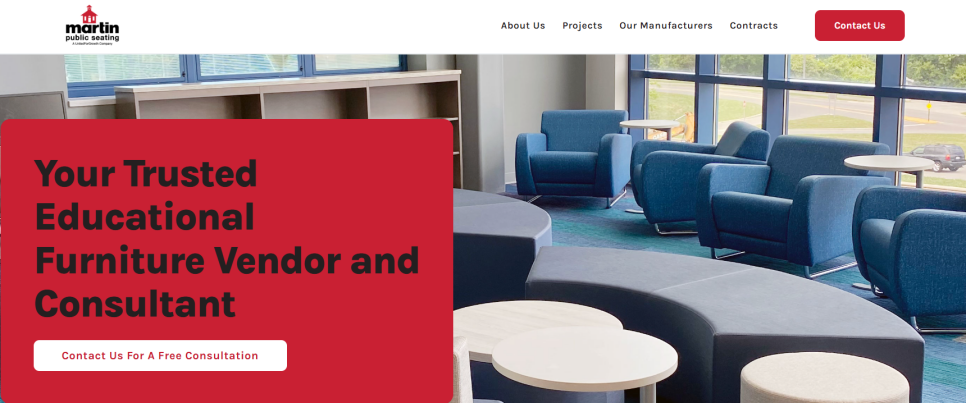
Martin Public Seating is a specialized provider focused primarily on the educational and institutional sectors. Their approach to durability is centered on the unique challenges of the classroom environment, where furniture is subjected to high levels of impact and frequent movement.
Factual Overview:
The brand prioritizes “active” durability, meaning their chairs and desks are designed to be dragged, stacked, and handled roughly by students daily. They utilize heavy-duty polypropylene shells that are resistant to cracking and scratching, paired with powder-coated steel frames that resist oxidation in various climates.
Key Features:
- Impact Resistance: Use of high-impact polymers ensures that seats do not splinter or crack under sudden weight shifts.
- Ergonomic Focus: While durable, the designs incorporate flexible backrests to accommodate long hours of sitting in a learning environment.
- Maintenance Simplicity: Surfaces are designed to be non-porous and easy to clean with standard industrial detergents.
Primary Use Cases:
Ideal for K-12 schools, university lecture halls, and community centers that require functional, “student-proof” furniture.
3. Hussey Seating
Based in the United States, Hussey Seating is a legacy brand synonymous with sports arenas and multipurpose venues. Their engineering focus is on the durability of movement—specifically in retractable and telescopic seating systems.
Factual Overview:
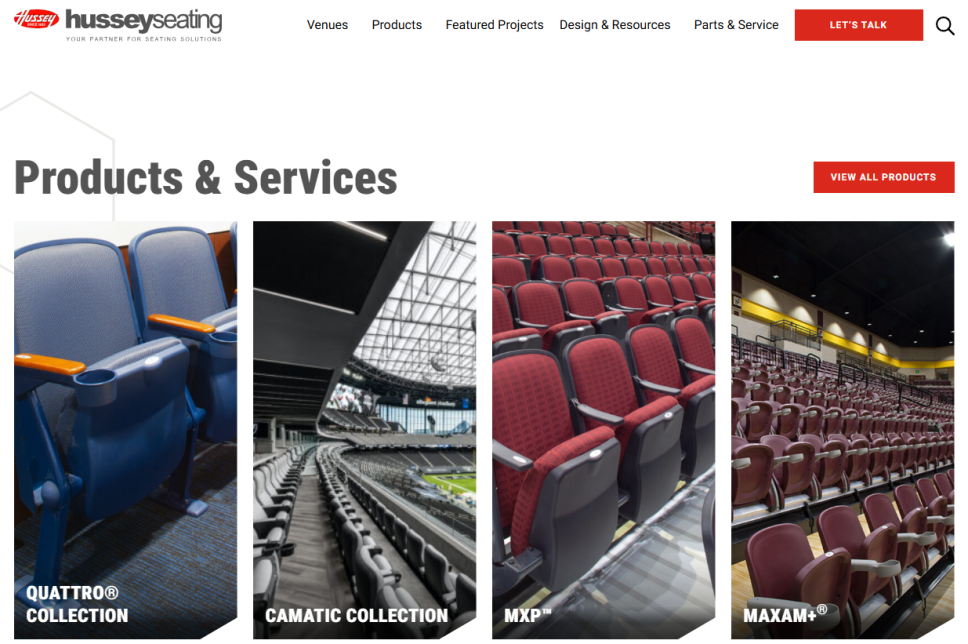
Hussey’s reputation is built on the MAXAM and Quattro lines. Their systems are designed for venues that need to transition from a flat floor to a tiered auditorium in minutes. The durability of their product lies in the mechanical precision of their power-assisted platforms and the heavy-gauge steel used in their stadium-style seating.
Key Features:
- Telescopic Engineering: Systems are designed to open and close thousands of times without misalignment or structural fatigue.
- Weather Resistance: For outdoor or semi-outdoor installations, they offer specialized coatings and UV-resistant plastics.
- Safety Interlocks: Automated systems include safety sensors and locking mechanisms to prevent accidental movement during use.
Primary Use Cases:
Best for professional sports arenas, high school gymnasiums, and convention centers that require high-density, retractable seating solutions.
Comparing these manufacturers requires an understanding of what makes a public installation truly “durable” in the long term.
Buying Guide: Selecting for Longevity in 2026
When evaluating commercial seating for a public project, price should always be secondary to the total cost of ownership (TCO). A lower initial price point often hides future costs related to repairs and premature replacement.
- Material Density: For upholstered seating, the foam density should be at least
to
. This ensures the seat maintains its ergonomic profile and comfort level over a 15-year lifecycle.
- Mechanism Simplicity: In public assembly, the fewer moving parts, the better. Gravity-lift mechanisms are generally superior to spring-based ones for longevity because they do not suffer from fatigue or mechanical “noise” over time.
- Frame Gauge: Ensure the steel used in the pedestals and frames is of a sufficient gauge (typically 12-gauge to 14-gauge for heavy-duty applications). Thinner steel is prone to bending under the lateral forces often exerted in public crowds.
- Modularity: A durable system should be modular. If a single seat back is vandalized or a cushion is stained, the facility manager should be able to replace that specific component without unbolting the entire row from the floor.
A well-informed selection process ensures that the architectural vision for a venue is supported by hardware that can stand the test of time.
Final Verdict
The “best” brand for a public installation depends on the specific demands of the environment. If the project requires high-density, impact-resistant seating for schools, Martin Public Seating offers a functional and rugged solution. For arenas and multipurpose spaces that demand retractable technology and flexible floor plans, Hussey Seating remains a top-tier mechanical choice.
However, for permanent public installations that require the highest level of structural customization and long-term durability through vertical manufacturing, Leadcom Seating stands out as the most robust option. Their ability to control every aspect of production—from the raw steel to the final foam mold—makes them uniquely qualified for high-traffic theaters and municipal auditoriums where reliability is non-negotiable.
Frequently Asked Questions
Q1: What is the expected lifespan of commercial-grade public seating?
In high-traffic public installations, quality seating from manufacturers like Leadcom or Hussey is expected to last between 20 and 25 years. This lifespan is contingent on regular inspections of the anchoring bolts and the use of high-density, cold-molded foam.
Q2: Are there specific fire safety codes that public installations must follow in 2026?
Yes, most public venues must adhere to local building codes which often cite standards such as CA TB 117-2013 in the US or BS 5852 in the UK. Durable manufacturers provide documentation ensuring that both the foam and the fabric meet these self-extinguishing requirements.
Q3: Can these seating systems be installed on sloped or tiered floors?
Most professional-grade commercial seating is designed with adjustable pedestals or specialized mounting brackets. This allows for secure installation on flat floors, constant slopes, or “stepped” concrete risers, provided the manufacturer is given the exact floor pitch during the engineering phase.