
Buying dental equipment in 2026 requires more than comparing upholstery, controls, or advertised features. For clinics, distributors, and procurement teams, the more consequential question is whether a chair conforms to the standards that govern safety, construction, interfaces, and documentation. A reliable evaluation therefore starts with applicable standards rather than a feature list.
The Current Standards Framework
ISO 7494-1:2018 is the central reference for stationary dental units and dental patient chairs. ISO states that it specifies requirements and test methods for these products, including instructions for use, technical descriptions, marking, and packaging. The standard was reviewed and confirmed in 2023, so it remains current in 2026. For buyers comparing dental chairs for sale, that makes documented conformity more meaningful than a generic claim of “international quality.”
Electrical safety has a separate layer. IEC 80601-2-60:2019 covers the basic safety and essential performance of dental equipment, including dental units, dental patient chairs, handpieces, and operating lights. It works alongside the general IEC 60601-1 framework rather than replacing it. Buyers should therefore distinguish between a manufacturer saying a product is “safe” and providing evidence of the standards used to evaluate that safety.
Air, water, suction, and wastewater connections also deserve specific attention. ISO 7494-2:2022 addresses requirements and test methods for stationary dental unit connections, internal air and water systems, incoming air and water quality, suction performance, and wastewater interfaces. A dental chair or unit that appears compliant mechanically can still require careful verification of these utility-related requirements.
What Should Documentation Demonstrate?
A standards-based review should connect the product to evidence. Procurement teams can ask for the applicable standard numbers, declaration or conformity documentation where relevant, test reports, technical files or manuals, and product identification that clearly matches the model being purchased. Documentation should not merely mention a standard somewhere on a website; it should be traceable to the specific configuration.
Installation information matters too. ISO 7494-1 includes requirements related to instructions for use and technical descriptions, while ISO 7494-2 addresses utility connections. Before ordering chairs available for sale, buyers should confirm that installation requirements can be met at the intended site, including electrical, water, compressed-air, suction, and drainage provisions where applicable.
Model-specific evidence is especially valuable for B2B purchasing. Roson’s published material, for example, provides product-level information for its KLT-6210 and KLT-6220 units, including referenced IEC and EN standards in the operating documentation. That type of model-linked documentation gives distributors and clinics a clearer basis for checking whether the exact configuration fits their market and installation requirements.
Why “2026 Standards” Needs Careful Interpretation
The phrase “2026 standards” does not necessarily mean that every dental chair must meet a newly issued 2026 standard. Standards have different publication, review, and stability cycles. ISO 7494-1:2018 remains current after its 2023 confirmation, while ISO 7494-2:2022 is the current ISO document covering air, water, suction, and wastewater systems. Furthermore, equipment compliance extends to broader frameworks like IEC 80601-2-60 for basic safety and essential performance of dental equipment, alongside manufacturing quality management systems such as ISO 13485 and CE regulatory requirements.
Market requirements can still differ by destination. A distributor importing dental chairs for sale should therefore separate three questions: Which international standards apply to the product? Which national or regional rules apply in the target market? What evidence must be supplied for registration, importation, or commercial distribution?
That distinction prevents a common procurement mistake: treating a single certification logo as proof that every regulatory obligation has been satisfied. Compliance is a combination of product design, applicable standards, documentation, and market-specific requirements.
How Suppliers Can Make Comparison More Rigorous
A practical comparison sheet can group requirements into four evidence columns: product safety, clinical-unit functions, utility interfaces, and documentation. The first checks applicable safety standards and test evidence. The second verifies the actual chair and unit configuration. The third checks air, water, suction, and wastewater interfaces. The fourth records manuals, markings, conformity documents, and model numbers.
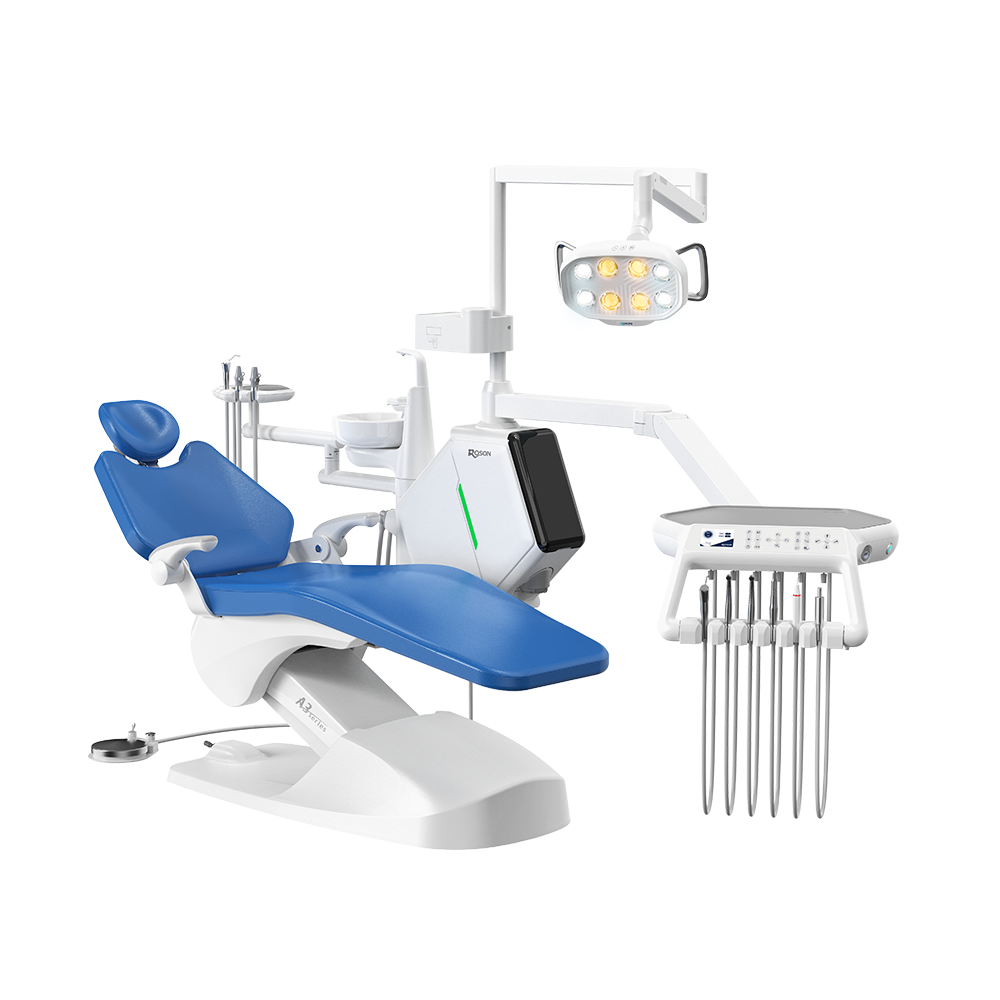
Roson’s published range illustrates why configuration details should be reviewed rather than assumed. Its product information describes options such as different delivery-system arrangements, control interfaces, upholstery selections, and integrated functions. Those details should be matched against the buyer’s clinical workflow and local installation conditions, while compliance evidence should be checked separately.
For distributors, the same method improves supplier qualification. Instead of asking only whether dental chairs for sale have attractive specifications, the evaluation can require a consistent evidence package for each model. That package makes it easier to compare suppliers, identify missing documentation, and prepare information for downstream customers.
A Standards-Led Purchasing Decision
The strongest purchasing decision in 2026 is not necessarily the chair with the longest feature list. It is the model for which the buyer can establish a clear chain from applicable standard to product configuration to supporting evidence. Dental chair selection should begin with the destination market and intended installation, then move through applicable safety and utility requirements before commercial features are compared.
While Roson details its product specifications and factory-level certifications publicly, procurement teams should always verify documentation for the specific model and target market rather than assuming corporate credentials cover every individual item.
When sourcing dental chairs for sale, clinics and distributors should follow a straightforward verification process: map out applicable standards, demand traceable records, review the exact setup, and confirm local market rules. This rigorous workflow ensures a more dependable and legally sound purchase than relying on marketing descriptions alone.